
Linking Hidden Resources and Activities in a Block

Margarita Berezyanskaya
Last Update 2 maanden geleden
Note: This article explains how to link to hidden resources and activities. It uses a block as an example, but similar steps are used to do this in a Book.
To reduce instances of often accessed link from the topics on your courses you can hide them and position them into a block for quick access. An example is a BigBlueButton virtual classroom link. If the BBB link is in a block, learners can access it while it is not showing in the topics area.
Hiding a Resource or Activity
1. At the top of the Course Homepage, click on the Edit mode toggle button in the upper right corner of the screen to activate the editing tools.

2. Click on the Edit link beside the activity or resource.

3. In the drop-down menu, select Availability, then Hide on Course page.

Note: The students cannot see the BigBlueButton activity. Teachers can see a Hidden from students pill under the activity name.

Adding a Resource or Activity to a Block
1. Identify an activity or resource in the Topics section.
Note: In this case it is a BigBlueButton activity.

2. Click on the activity or resource to open it.
3. Select and copy the web address.

4. Click on the course name in the breadcrumbs menu to return to the course main menu.
5. Ensure that Edit mode is on.

6. On the right side of the screen, click on the Open block drawer icon.

7. Click on the Add a block button that appears.

8. In the pop-up menu that appears, click on the Text option.

9. The Text block editor pop-up appears. Leave the Text block title empty or add a short title.
10. Type a text link name (easy for students to read).
11. Select the text, and then click on the Link icon.

12. In the Create link pop-up, paste the activity or resource web address from Step 2 in the previous section.
13. Check the Open in new window checkbox.
14. Click on the Create link button.

15. Click on the Save changes button.
Note: The link to the activity appears in the block.

Note: To improve the recognition of the link, it is advisable to include a graphical icon. See the section, Add an image to a block below.
Adding an Image to a Block
1. Open your course to the activity or resource you are adding to the block.

2. On your keyboard, hold down the Windows logo key + SHIFT and press on the S key.
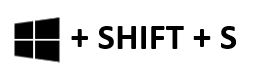
3. Drag a rectangle around your shape.
Note: A message appears. If a message does not appear, the image is saved to the clipboard.

4. Click on the Save icon.
5. Give the image a name and save it to your hard drive.
Note: The image is ready to be added to your block.
6. Ensure course Edit mode is on.

7. On the appropriate Text block, click on the Edit icon.

8. In the drop-down menu, choose the Configuring a (new Text block name) block option.

9. In the Content area, click before the text, ensure that the link icon is not active. Then click on the Image icon in the toolbar.

10. Drag an image from your computer onto the Insert image Insert Image pop-up.

11. In the Image properties pop-up, type a descriptive name for the icon in the Describe this image for someone who cannot see it textbox.
12. Consider reducing the size of the image, as it will be shown in a block.
13. Click on the Save button.

14. If the image and link are acceptable, click on the
Save changes button.
Note: The image/icon appears in the block. This makes locating the link much easier for the students
